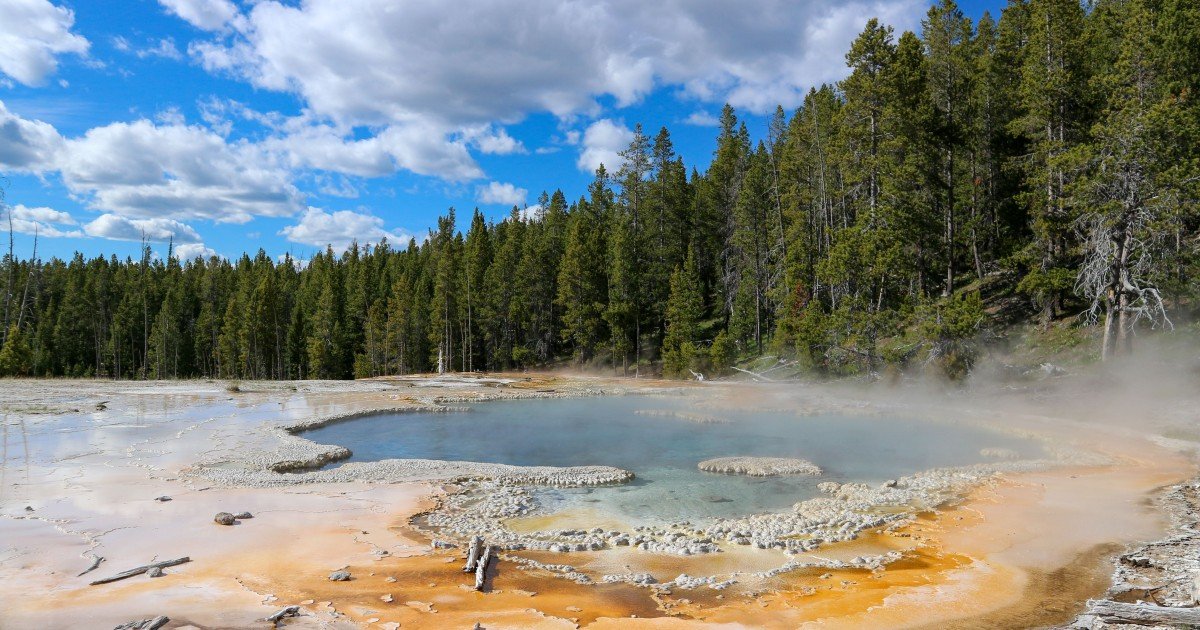
If you have ever looked at a map of the United States and wondered where is Yellowstone, the answer is a little more interesting than simply naming a state. Yellowstone National Park is primarily located in northwestern Wyoming, but parts of the park also extend into Montana and Idaho. Famous for its geysers, hot springs, wildlife, mountains, lakes, and dramatic landscapes, Yellowstone is one of the most distinctive national parks in the United States. Its enormous size also means that knowing its exact location, entrances, nearby towns, and road connections can make a major difference when planning a visit.
Yellowstone is not simply a destination where you arrive at one gate and see everything in a day. The park covers a huge area, and different entrances provide access to different regions. A traveler coming from Salt Lake City, Denver, Bozeman, Jackson, or Idaho Falls may have a completely different driving route and starting point.
That is why understanding Yellowstone’s geography before booking accommodation or planning sightseeing is so useful.
Where Is Yellowstone National Park Located?
Yellowstone National Park is located in the northwestern part of the United States, mainly in the state of Wyoming. Smaller sections of the park reach into southern Montana and eastern Idaho.
The park sits within the Rocky Mountain region and is surrounded by a landscape of forests, mountain ranges, rivers, lakes, valleys, and high-elevation plateaus.
Its location can be summarized simply:
- Country: United States
- Primary state: Wyoming
- Also extends into: Montana and Idaho
- Region: Rocky Mountains
- Nearest major communities: Several towns in Wyoming, Montana, and Idaho serve as gateways
- Major geographic feature: Yellowstone Plateau and surrounding mountain landscapes
One of the most important things to understand is that Yellowstone is not located near a single major city. Instead, several gateway communities surround the park.
For example, West Yellowstone in Montana is one of the most popular access points for travelers approaching from the west. Gardiner, Montana, sits near the northern entrance. Jackson, Wyoming, is a major tourism base farther south, although it is not immediately next to the park’s most popular attractions.
This spread of entrances is one reason travelers should decide what they want to see before choosing where to stay.
Why Is Yellowstone in Three States?
Yellowstone is commonly associated with Wyoming because the overwhelming majority of the park lies within Wyoming’s borders. However, its boundaries cross state lines.
A small part of Yellowstone extends into Montana, while another small section reaches into Idaho.
This unusual arrangement is partly a result of the park’s location around the Yellowstone Plateau and the way the surrounding state boundaries were established.
The three-state geography is interesting for another reason. Yellowstone’s natural landscape does not follow political boundaries.
Animals move through the wider ecosystem regardless of where one state ends and another begins. Rivers, mountains, forests, and geothermal features are also part of a connected natural environment.
So while a map may show Wyoming, Montana, and Idaho, the Yellowstone ecosystem is much larger than the national park itself.
How Big Is Yellowstone National Park?
Yellowstone is enormous.
The park covers roughly 2.2 million acres, making it larger than many people expect when they first look at a park map. Its roads form a broad network connecting major areas, but distances that look short on a map can take considerably longer to travel because of winding mountain roads, wildlife encounters, road conditions, construction, and seasonal closures.
This size affects nearly every part of a Yellowstone trip.
If you stay near one entrance, reaching an attraction on the opposite side of the park may take several hours. Trying to see the entire park in one day can therefore result in spending much of your visit inside a vehicle.
A better approach is to divide Yellowstone into geographic areas.
Major areas include:
- Old Faithful and the Upper Geyser Basin
- Midway Geyser Basin
- Lower Geyser Basin
- Grand Canyon of the Yellowstone
- Yellowstone Lake
- Mammoth Hot Springs
- Lamar Valley
- Norris Geyser Basin
- Hayden Valley
- West Thumb
- Tower area
Each region has its own character.
Old Faithful is associated with famous geothermal activity. The Grand Canyon of the Yellowstone offers dramatic views and waterfalls. Lamar Valley is known for wildlife viewing. Yellowstone Lake provides a completely different landscape of open water surrounded by mountains and forest.
This variety is one of the reasons Yellowstone deserves more planning than a typical weekend sightseeing destination.
What State Is Yellowstone In?
If someone asks, “What state is Yellowstone in?” the simplest answer is Wyoming.
However, saying only Wyoming leaves out an important geographical detail.
Yellowstone National Park is approximately 96 percent in Wyoming, while small portions extend into Montana and Idaho. Because most famous attractions are within the Wyoming portion, travelers commonly describe Yellowstone as a Wyoming national park.
The distinction matters when planning flights and road trips.
For example, someone may fly into Bozeman, Montana, because it provides convenient access to the northern and western sides of Yellowstone. Another traveler may arrive through Jackson, Wyoming, and approach the park from the south.
So the best gateway is not necessarily determined by the state where the majority of the park is located.
Yellowstone’s Five Main Entrances
Yellowstone has five principal entrances, and each one provides access to a different part of the park.
Understanding them is one of the easiest ways to make your travel plan more efficient.
North Entrance
The North Entrance is located near Gardiner, Montana.
It provides access toward Mammoth Hot Springs and the northern section of Yellowstone. This entrance is particularly notable because the northern area has historically provided an important year-round connection to the park, although travelers should always check current road conditions and seasonal restrictions before traveling.
Gardiner is a useful gateway community for visitors who want to explore Mammoth Hot Springs and northern Yellowstone.
Northeast Entrance
The Northeast Entrance connects the park with the community of Cooke City and the Beartooth region of Montana.
This route is especially scenic. The surrounding mountain landscape makes the drive itself part of the experience.
The Northeast Entrance also provides access toward Lamar Valley, an area that attracts visitors interested in seeing wildlife.
Because mountain roads can be affected by weather, travelers should verify current conditions before relying on this route.
East Entrance
The East Entrance connects Yellowstone with the Cody area of Wyoming.
This route is particularly useful for travelers combining Yellowstone with Cody and other attractions in northwestern Wyoming.
The drive toward Yellowstone from Cody can be an experience in itself, with changing scenery as you approach the park.
For visitors coming from the eastern side of Wyoming, this entrance can be a natural choice.
South Entrance
The South Entrance connects Yellowstone with Grand Teton National Park and the Jackson area.
This makes it especially attractive for travelers planning a combined Yellowstone and Grand Teton itinerary.
The two parks offer very different experiences. Yellowstone is famous for geothermal features and wildlife, while Grand Teton is known for its dramatic mountain skyline, alpine scenery, and lakes.
Combining them can create a much richer Rocky Mountain vacation.
West Entrance
The West Entrance is near West Yellowstone, Montana.
For many travelers, this is one of the most convenient gateways because it provides relatively direct access to major geothermal attractions.
West Yellowstone is also a popular place to stay outside the national park.
Visitors using this entrance can reach areas such as Madison, Norris, and the geyser basins depending on current road conditions and seasonal access.
Which Entrance Is Best for Yellowstone?
There is no universally best Yellowstone entrance.
The right entrance depends on your starting location and what you want to see.
Consider this simple approach:
- Old Faithful: West or South approaches can be useful depending on your route.
- Mammoth Hot Springs: North Entrance is convenient.
- Lamar Valley: Northeast Entrance is particularly useful.
- Yellowstone Lake: East or South approaches may work well.
- Grand Canyon of the Yellowstone: Several entrances can work, depending on your starting point.
- Grand Teton combination: South Entrance is the natural connection.
- Cody combination: East Entrance is useful.
- West Yellowstone stay: West Entrance is the obvious gateway.
Instead of asking which entrance is best in general, ask which entrance puts you closest to the experiences you actually want.
What Are the Closest Cities to Yellowstone?
Yellowstone does not have a large city immediately outside its boundaries. Instead, several gateway towns provide accommodation, restaurants, supplies, fuel, and other visitor services.
West Yellowstone, Montana
West Yellowstone is one of the best-known gateway communities.
It sits close to the park’s western entrance and is particularly convenient for visitors focusing on the geothermal attractions in the western part of Yellowstone.
Because of its location, it can be a practical base for travelers who prefer to stay outside the national park.
Gardiner, Montana
Gardiner sits near Yellowstone’s North Entrance.
It is especially convenient for exploring Mammoth Hot Springs and northern Yellowstone.
The town has a strong connection with park tourism and can be a useful base for visitors arriving from Montana.
Cody, Wyoming
Cody is located east of Yellowstone.
It is farther from some major Yellowstone attractions than the gateway towns directly beside the park, but it offers a distinct western Wyoming travel experience.
Cody can work particularly well for travelers who want to combine Yellowstone with other attractions in the region.
Jackson, Wyoming
Jackson is a major tourism destination south of Yellowstone.
It is not directly outside the park, so visitors should not assume they can stay in Jackson and quickly reach every Yellowstone attraction.
However, Jackson is an excellent base for travelers planning to combine Yellowstone with Grand Teton National Park.
Bozeman, Montana
Bozeman is farther from Yellowstone than the immediate gateway towns but is an important regional travel hub.
It can be useful for travelers who want access to airport services, restaurants, accommodation, and other conveniences before driving toward Yellowstone.
Idaho Falls, Idaho
Idaho Falls can also serve as a starting point for Yellowstone trips, especially for travelers approaching from Idaho or combining several destinations across the region.
Its location makes it an alternative gateway for certain road-trip itineraries.
How Far Is Yellowstone From Major Cities?
Driving distances vary depending on which Yellowstone entrance you use. This is an important point because saying that a city is “X miles from Yellowstone” can be misleading.
Yellowstone is too large to have one single practical distance.
For example, a route from Salt Lake City to the western entrance is very different from a route from Denver to the eastern entrance. Similarly, Jackson to the South Entrance is a different journey from Bozeman to the North Entrance.
Travelers should therefore calculate distances to a specific Yellowstone entrance, not simply to Yellowstone National Park as a whole.
This small planning habit can prevent major surprises.
Why Is Yellowstone Famous?
Yellowstone is famous because several extraordinary natural systems exist within one enormous protected landscape.
The park is internationally recognized for geothermal features, including geysers, hot springs, mud pots, and fumaroles.
Old Faithful is perhaps the most recognizable feature. Its regular eruptions have made it one of the most famous natural attractions in the United States.
But Old Faithful is only one part of Yellowstone’s geothermal story.
The park contains numerous geothermal areas, and each has a different appearance.
Grand Prismatic Spring is famous for its vivid colors and enormous size. Norris Geyser Basin has a rugged, constantly changing geothermal landscape. Mammoth Hot Springs features terraces created through mineral-rich thermal water.
These features exist because Yellowstone sits above a major volcanic system.
That does not mean visitors should think of Yellowstone simply as a volcano. The geothermal system is a complex natural environment that influences hot springs, geysers, gases, and underground heat.
Yellowstone Wildlife and Natural Scenery
Yellowstone is also famous for wildlife.
Visitors may encounter animals such as:
- Bison
- Elk
- Bears
- Wolves
- Coyotes
- Moose
- Pronghorn
- Bighorn sheep
- Deer
Wildlife viewing is never guaranteed, and animals are wild rather than attractions placed for visitors.
Lamar Valley and Hayden Valley are particularly well known for wildlife observation, but animals can appear throughout the park.
This is one of the reasons patience matters at Yellowstone.
A sudden line of stopped vehicles may indicate that people have spotted wildlife. However, visitors should never approach animals simply to get a closer photograph.
Keeping a safe distance protects both people and wildlife.
When Is the Best Time to Visit Yellowstone?
The best time to visit Yellowstone depends on what you want from the trip.
Summer
Summer generally provides the broadest access to park roads and attractions.
It is also the busiest period.
Visitors can expect more traffic, fuller accommodation, and greater demand for popular viewpoints and services.
If you travel during summer, starting early can make a significant difference.
Fall
Fall can be appealing for travelers who prefer cooler temperatures, changing scenery, and potentially fewer visitors than peak summer.
Wildlife activity can also make autumn an interesting season for nature enthusiasts.
However, weather can become unpredictable as the season progresses.
Winter
Winter transforms Yellowstone dramatically.
Snow covers much of the landscape, roads close to regular automobile traffic in many areas, and travel becomes a specialized experience.
Snowmobiles, snowcoaches, and other permitted transportation methods may provide access to certain areas, depending on current regulations and conditions.
Winter is not simply summer with fewer people. It requires different preparation.
Spring
Spring brings changing conditions, and access can vary considerably.
Snow may remain in higher elevations while lower areas begin to warm.
Some roads and facilities may have seasonal limitations.
For travelers seeking flexibility, checking current park conditions before departure is particularly important during transitional seasons.
How Many Days Do You Need in Yellowstone?
A single day can introduce you to Yellowstone, but it is not enough to experience the park properly.
For a first visit, three to five days can provide a much more comfortable pace.
With three days, you can focus on major highlights.
With four or five days, you can spread out your driving and spend more time on wildlife viewing, walks, geothermal areas, scenic overlooks, and less crowded locations.
A longer trip also gives you flexibility when weather changes your plans.
Instead of trying to check every famous attraction off a list, consider building your itinerary around geographic areas.
For example:
Day One: Western geothermal areas
Day Two: Canyon and central Yellowstone
Day Three: Yellowstone Lake and surrounding areas
Day Four: Wildlife-focused northern areas
Day Five: Flexible day for missed attractions, hiking, or weather-related changes
This type of planning reduces unnecessary backtracking.
What Should You Know Before Visiting Yellowstone?
Yellowstone is a wild environment, not an ordinary city attraction.
A few practical habits can make the experience safer and more enjoyable.
Plan for Long Drives
Even attractions inside the same park can be separated by considerable distances.
Carry water, food, appropriate clothing, and other essentials, especially when spending a full day away from gateway communities.
Check Road Conditions
Yellowstone roads can close because of snow, weather, construction, wildlife activity, or other circumstances.
Always check current conditions before setting out.
Do Not Rely Completely on Mobile Connectivity
Cell service can be limited or inconsistent in parts of the park.
Download maps and important information before entering areas where connectivity may disappear.
Respect Wildlife
Never approach wild animals.
Bison may look calm, but they are powerful wild animals capable of moving surprisingly quickly.
Use designated viewing areas and maintain a safe distance.
Stay on Designated Trails
Geothermal areas can be beautiful but dangerous.
The ground around hot springs and thermal features is not necessarily stable, and extremely hot water may exist beneath or near the surface.
Boardwalks and designated trails exist for a reason.
Carry the Right Clothing
Mountain weather can change quickly.
Even during warmer months, mornings and evenings can feel cold, while rain and wind can arrive unexpectedly.
Layered clothing is generally more practical than relying on a single heavy or light outfit.
How Yellowstone Fits Into a Larger Road Trip
One of the best ways to experience Yellowstone is as part of a broader Rocky Mountain journey.
You could combine Yellowstone with Grand Teton National Park, Jackson, Cody, Montana, or parts of Idaho.
A traveler arriving from the west might create a route around Idaho and Montana before entering Yellowstone.
Someone coming from the south might combine Jackson, Grand Teton, and Yellowstone.
A traveler approaching from the east might build a Wyoming road trip around Cody and Yellowstone.
The key is to avoid treating Yellowstone as a small stop between two cities.
Its size rewards travelers who slow down.
For digital planning and general website resources, you may also find the site’s broader informational guides useful, including its discussion of free PDF editing tools and [free broken link checker tools](https://generalyhf.com/top-10-free-broken links-checker-tools-for-websites-in-2026/). These topics are separate from Yellowstone travel, but they can be useful when preparing documents, itineraries, or maintaining travel-related websites.
A Simple Yellowstone Planning Strategy
If you are planning your first Yellowstone trip, use this sequence.
First, choose your season.
Your travel dates influence road access, weather, crowds, and available activities.
Second, choose your main attractions.
Decide whether your priorities are geysers, wildlife, waterfalls, hiking, photography, scenic drives, or a mixture.
Third, choose your entrance.
Match the entrance to your starting point and preferred attractions.
Fourth, choose accommodation based on geography.
Do not choose a hotel simply because it says “near Yellowstone.” Check which entrance it is near and how long it will take to reach your intended areas.
Fifth, organize your days geographically.
Put nearby attractions together rather than repeatedly crossing the park.
Sixth, leave room for surprises.
Yellowstone is one of those places where the unexpected can become the highlight of the day. A wildlife sighting, changing weather, dramatic light, or an unplanned viewpoint can be more memorable than a rigid schedule.
Frequently Asked Questions About Where Is Yellowstone
Where is Yellowstone located?
Yellowstone National Park is primarily located in northwestern Wyoming, with smaller portions extending into Montana and Idaho.
What state is Yellowstone in?
Most of Yellowstone is in Wyoming. Small portions of the park extend into Montana and Idaho.
Is Yellowstone near Colorado?
Yellowstone is north of Colorado. It is possible to travel between Colorado and Yellowstone by road, but the journey is substantial and should be planned as a road trip rather than a short drive.
Is Yellowstone near Utah?
Yellowstone is north of Utah. Salt Lake City is a common starting point for some travelers heading toward the western or southwestern areas of the Yellowstone region.
What is the closest major city to Yellowstone?
There is no single major city directly beside Yellowstone. Bozeman, Montana; Jackson, Wyoming; and Idaho Falls, Idaho are among the important regional cities used by travelers, while West Yellowstone, Gardiner, and Cody are prominent gateway communities.
Which entrance is closest to Old Faithful?
The best entrance depends on your direction of travel, but the West Entrance is a particularly convenient gateway for visitors focusing on the western geothermal areas.
Can you visit Yellowstone in one day?
Yes, but one day only allows a limited introduction. Because Yellowstone is very large, several days provide a much better opportunity to explore its major regions.
Is Yellowstone in Wyoming or Montana?
It is primarily in Wyoming, although parts of the park extend into Montana and Idaho.
How far is Yellowstone from Jackson Hole?
Jackson is south of Yellowstone, and the South Entrance provides the connection between the Yellowstone and Grand Teton areas. Actual travel time depends on your exact starting point, destination within Yellowstone, road conditions, traffic, and seasonal access.
What is Yellowstone best known for?
Yellowstone is best known for its geothermal features, including geysers and hot springs, as well as wildlife, dramatic landscapes, Yellowstone Lake, and the Grand Canyon of the Yellowstone.
Can you drive through Yellowstone?
Yes, when the relevant roads are open and operating normally. However, seasonal closures and temporary restrictions can affect which routes are available.
Is Yellowstone worth visiting?
For travelers interested in geothermal landscapes, wildlife, mountains, lakes, waterfalls, hiking, and scenic drives, Yellowstone offers an unusually diverse experience in one protected area. The best experience comes from allowing enough time to explore without rushing.
Where Is Yellowstone and Why Does Its Location Matter?
So, where is Yellowstone? Yellowstone National Park is primarily in northwestern Wyoming, with smaller areas extending into Montana and Idaho. But its location is more than a point on a map. The park’s enormous size, five entrances, surrounding gateway communities, mountain geography, and seasonal road conditions all shape how a visit should be planned.
Knowing the location is the first step. The next step is understanding how the park is organized.
If you want to see Old Faithful and the geothermal basins, your itinerary may look very different from someone whose main goal is wildlife viewing in Lamar Valley. A traveler combining Yellowstone with Grand Teton may choose the South Entrance, while someone arriving from Montana may find a western or northern route more practical.
The biggest mistake is trying to treat Yellowstone like a small attraction that can be covered quickly.
Give the landscape time.
Plan around regions rather than individual attractions. Check road and weather conditions before traveling. Respect wildlife and geothermal areas. Keep your schedule flexible enough to enjoy moments that cannot be planned.
That approach turns Yellowstone from a checklist of famous sights into what it really is: a vast and remarkable natural landscape where the journey between attractions can be just as memorable as the destination itself.
Frequently Asked Questions
Where is Yellowstone?
Yellowstone is primarily in northwestern Wyoming, with smaller portions in Montana and Idaho.
What are the five Yellowstone entrances?
The park’s five principal entrances are North, Northeast, East, South, and West.
What is the best entrance for first-time visitors?
There is no single best entrance. Choose based on your starting point and the areas you want to explore.
How long should you spend in Yellowstone?
Three to five days is a useful starting range for a first visit, although longer trips allow a more relaxed experience.
What is Yellowstone famous for?
It is especially famous for geysers, hot springs, wildlife, mountains, lakes, waterfalls, and other geothermal and natural features.
Can Yellowstone and Grand Teton be visited together?
Yes. Their locations make a combined trip practical, particularly through the southern part of the Yellowstone region.
What should visitors be most careful about?
Wildlife, geothermal areas, changing weather, road conditions, and long driving distances all deserve careful attention.
Informational Disclaimer: This article is intended for general informational and educational purposes only. Yellowstone road access, weather conditions, seasonal services, entrance availability, regulations, and travel conditions can change. Always verify current conditions and official park information before making travel decisions.






Leave a Reply