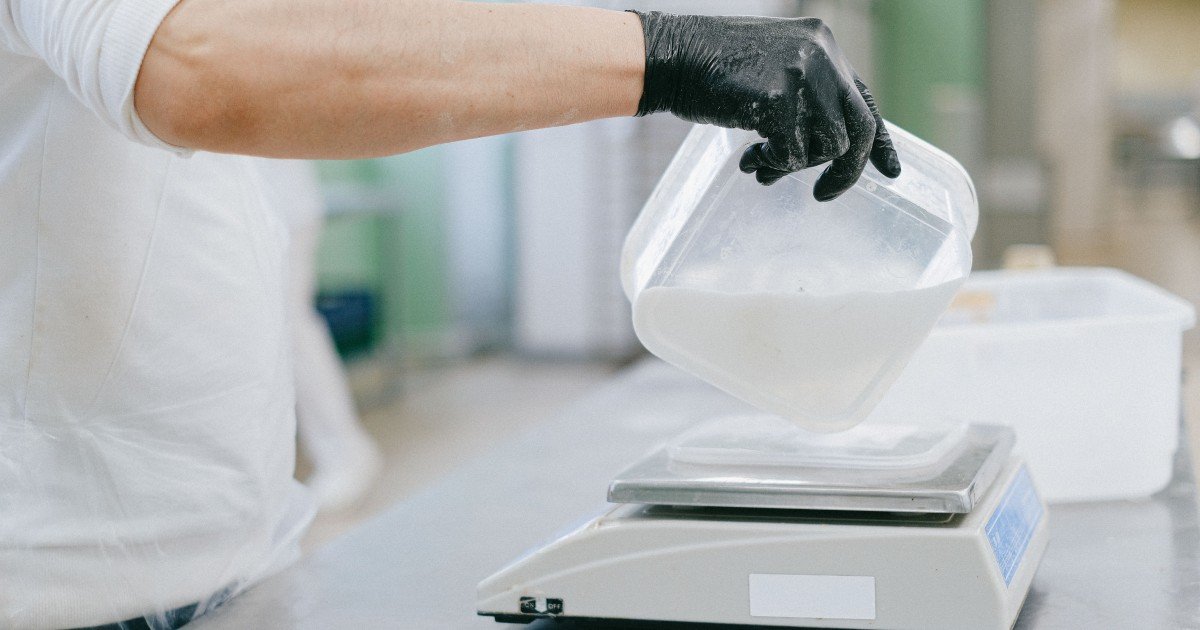
If you have ever started a recipe and wondered how many ounces are in a cup, you are definitely not alone. The short answer is that 1 US cup equals 8 US fluid ounces when you are measuring liquid by volume. But there is an important detail that often causes confusion: fluid ounces measure volume, while ounces can also refer to weight. On top of that, US, metric, and UK measurements are not always identical. Understanding these differences can save you from inaccurate recipes, confusing conversions, and unnecessary measuring mistakes.
A cup sounds like a simple measurement, but the answer changes depending on what you are measuring and which measurement system a recipe uses. A cup of water can be described in fluid ounces because both measure volume. A cup of flour, however, does not have a fixed number of ounces by weight because flour is much lighter than water.
This guide breaks down the difference in plain English so you can confidently convert cups to ounces for cooking, baking, beverages, meal preparation, and everyday kitchen measurements.
How Many Ounces Are in a Cup?
For the US customary measurement system, the standard conversion is:
1 US cup = 8 US fluid ounces
That means:
| Cups | US Fluid Ounces |
|---|---|
| 1/4 cup | 2 fl oz |
| 1/3 cup | 2.67 fl oz |
| 1/2 cup | 4 fl oz |
| 2/3 cup | 5.33 fl oz |
| 3/4 cup | 6 fl oz |
| 1 cup | 8 fl oz |
| 1 1/2 cups | 12 fl oz |
| 2 cups | 16 fl oz |
| 3 cups | 24 fl oz |
| 4 cups | 32 fl oz |
The easiest formula is:
Cups × 8 = US fluid ounces
For example, if a recipe calls for 2 cups of milk:
2 × 8 = 16 fluid ounces
So, 2 US cups of milk equal 16 US fluid ounces.
The reverse calculation is equally simple:
Fluid ounces ÷ 8 = cups
If you have 12 fluid ounces of juice:
12 ÷ 8 = 1.5 cups
Therefore, 12 US fluid ounces equal 1 1/2 US cups.
This conversion works for liquids when both measurements are using the US customary system. It should not automatically be applied to dry ingredients by weight.
Why the Answer Is Not Always Simply 8 Ounces
The biggest source of confusion is the word “ounce.”
An ounce by weight and a fluid ounce by volume are two different measurements.
A fluid ounce tells you how much space a liquid occupies. A weight ounce tells you how heavy something is.
Think about a cup of water and a cup of flour. Both can fill the same measuring cup, so they occupy approximately the same volume. However, they do not weigh the same amount.
This is why saying “one cup equals eight ounces” without explaining the type of ounce can be misleading.
Fluid Ounces Measure Volume
A fluid ounce, abbreviated as fl oz, is a unit of volume.
It is commonly used for:
- Water
- Milk
- Juice
- Cooking oil
- Coffee
- Broth
- Sauces
- Syrups
- Other liquids
When an American recipe says a cup contains 8 ounces of liquid, it generally means 8 fluid ounces, not 8 ounces by weight.
Ounces Can Measure Weight
An ounce, abbreviated as oz, is commonly used as a unit of weight or mass in everyday US measurements.
For example, a recipe might ask for 4 ounces of cheese. That usually means the cheese should be weighed rather than poured into a liquid measuring cup.
This distinction becomes especially important in baking, where small differences in ingredient quantities can change the final texture.
How Many Fluid Ounces Are in Different Cup Measurements?
Once you know that 1 US cup equals 8 fluid ounces, most conversions become straightforward.
1/4 Cup
A quarter cup equals:
2 US fluid ounces
This is also equal to 4 tablespoons in the US customary system.
1/3 Cup
One-third of a US cup equals approximately:
2.67 US fluid ounces
This is not a whole-number conversion, which is why measuring cups with 1/3-cup markings can be useful.
1/2 Cup
Half a cup equals:
4 US fluid ounces
This is one of the most commonly used kitchen conversions.
2/3 Cup
Two-thirds of a cup equals approximately:
5.33 US fluid ounces
3/4 Cup
Three-quarters of a cup equals:
6 US fluid ounces
1 Cup
One cup equals:
8 US fluid ounces
2 Cups
Two cups equal:
16 US fluid ounces
This is also equal to one US pint by volume.
4 Cups
Four cups equal:
32 US fluid ounces
This corresponds to one US quart.
These relationships make it easy to move between common kitchen measurements without reaching for a calculator every time.
Cups to Ounces Conversion Chart
For everyday cooking, keeping a quick reference chart nearby can make recipe preparation much easier.
| US Cups | Fluid Ounces | Approximate Milliliters |
|---|---|---|
| 1/8 cup | 1 fl oz | 29.6 mL |
| 1/4 cup | 2 fl oz | 59.1 mL |
| 1/3 cup | 2.67 fl oz | 78.9 mL |
| 1/2 cup | 4 fl oz | 118.3 mL |
| 2/3 cup | 5.33 fl oz | 157.7 mL |
| 3/4 cup | 6 fl oz | 177.4 mL |
| 1 cup | 8 fl oz | 236.6 mL |
| 1 1/2 cups | 12 fl oz | 354.9 mL |
| 2 cups | 16 fl oz | 473.2 mL |
| 3 cups | 24 fl oz | 709.8 mL |
| 4 cups | 32 fl oz | 946.4 mL |
The milliliter values are approximate conversions based on the US customary cup, which is about 236.6 milliliters.
However, recipes may use a metric cup instead, so always consider the measurement system before converting.
US Cup vs Metric Cup vs UK Cup
Not every country defines a cup in exactly the same way.
This matters if you are following an international recipe. A recipe published in the United States may use a different cup measurement from one written for an Australian, New Zealand, or older British audience.
US Customary Cup
A standard US customary cup is approximately:
236.6 mL
It equals:
8 US fluid ounces
This is the cup measurement most commonly intended by American recipes.
Metric Cup
A metric cup is generally:
250 mL
If you convert 250 mL into US fluid ounces, it is approximately:
8.45 US fluid ounces
So a metric cup is slightly larger than a US customary cup.
That difference may not matter much when making a simple drink, but it can become noticeable in recipes that use several cups of ingredients or require precise proportions.
UK Imperial Measurements
Traditional British Imperial measurements use different volume relationships. An Imperial cup is approximately 284 mL when defined as 10 Imperial fluid ounces.
This is why blindly converting every recipe using the US 8-fluid-ounce rule can lead to an inaccurate result when the original recipe uses Imperial measurements.
The safest approach is to identify the measurement system first.
How Many Ounces Are in a Cup of Water?
For everyday US kitchen measurement, 1 cup of water equals 8 US fluid ounces by volume.
Water is one of the easiest examples because its density is familiar and its volume-to-weight relationship is relatively convenient.
A US cup of water has a volume of approximately 236.6 mL.
However, there is a subtle distinction worth remembering.
If someone asks for “8 ounces of water,” they could mean 8 fluid ounces of volume or 8 ounces by weight. In casual cooking conversations, the intended meaning is often fluid ounces when discussing liquids. For precision, it is better to specify the measurement type.
How Many Ounces Are in a Cup of Milk?
Using the US volume system:
1 cup of milk = 8 US fluid ounces
The same cup-to-fluid-ounce relationship applies because the cup and fluid ounce are both volume measurements.
The weight of that milk, however, is not necessarily exactly 8 ounces.
That is the key lesson: 8 fluid ounces describes volume, not the actual weight of the milk.
The same principle applies to juice, cream, broth, and other liquids.
How Many Ounces Are in a Cup of Flour?
This is where many cooking conversions go wrong.
There is no universal answer to “How many ounces are in a cup of flour?” if the question refers to weight.
A cup measures volume, while ounces by weight measure mass. The weight of a cup depends on the ingredient and how densely it is packed.
Flour can be scooped loosely, compressed, or spooned into a measuring cup. Those methods can produce different weights even when the measuring cup appears full.
For baking, a kitchen scale is often more reliable than trying to convert every ingredient from cups to ounces by using one universal formula.
The same issue applies to:
- Sugar
- Rice
- Oats
- Cocoa powder
- Nuts
- Grated cheese
- Breadcrumbs
- Dried beans
- Powdered ingredients
Each ingredient has its own density.
Why Dry Ingredients Need Special Attention
Imagine filling one cup with feathers and another cup with sand. The cups contain the same volume, but their weights are dramatically different.
Kitchen ingredients behave in a similar way.
A cup of granulated sugar and a cup of flour occupy the same volume, but they do not have the same weight.
Even two cups of the same ingredient can have different weights depending on preparation.
For example, flour can be:
- Sifted
- Spoon-and-leveled
- Scooped directly from a container
- Compressed into the cup
These methods change how much material is actually packed into the same volume.
Measuring Flour More Accurately
If a recipe gives flour in grams, using a digital kitchen scale is usually the best approach.
If a recipe gives cups, follow its stated measuring instructions carefully.
For baking, do not assume that every dry ingredient follows the 8-ounce-per-cup rule. That rule refers to fluid ounces of volume, not ounces of weight.
Cups, Fluid Ounces, Tablespoons, and Teaspoons
Understanding how these measurements relate to one another can make everyday cooking much easier.
In the US customary system:
1 cup = 8 fluid ounces
1 cup = 16 tablespoons
1 cup = 48 teaspoons
Therefore:
1 tablespoon = 1/2 fluid ounce
And:
1 teaspoon = 1/6 fluid ounce
These relationships are especially helpful when you do not have the exact measuring cup required by a recipe.
For example, if you need 1/4 cup but only have a tablespoon measure:
1/4 cup = 4 tablespoons
If you need 1/2 cup:
1/2 cup = 8 tablespoons
This gives you several ways to measure the same volume.
How to Convert Ounces to Cups
The reverse conversion is just as easy.
If the measurement is in US fluid ounces, divide by 8.
Examples
4 fluid ounces
4 ÷ 8 = 0.5 cup
So 4 fluid ounces equal 1/2 cup.
6 fluid ounces
6 ÷ 8 = 0.75 cup
So 6 fluid ounces equal 3/4 cup.
12 fluid ounces
12 ÷ 8 = 1.5 cups
So 12 fluid ounces equal 1 1/2 cups.
20 fluid ounces
20 ÷ 8 = 2.5 cups
So 20 fluid ounces equal 2 1/2 cups.
The formula is simple enough to remember:
US fluid ounces ÷ 8 = US cups
Just make sure you are converting volume to volume.
Why Measuring Tools Matter in Cooking
It is tempting to think that any cup in the kitchen can be used as a measuring cup. Technically, a drinking glass can hold a certain amount of liquid, but its capacity is not necessarily one standard cup.
A standard measuring cup is designed around a defined measurement.
This distinction matters because ordinary mugs, glasses, bowls, and serving cups come in many different sizes.
A mug that looks like one cup may actually hold 10, 12, or even 16 fluid ounces.
For consistent cooking, use measuring equipment designed for the measurement system in your recipe.
Liquid Measuring Cups
Liquid measuring cups are usually designed with space above the measurement line so liquids can be poured without overflowing.
They are useful for:
- Water
- Milk
- Oil
- Juice
- Broth
- Liquid sauces
Dry Measuring Cups
Dry measuring cups are generally designed to be filled and leveled.
They are commonly used for:
- Flour
- Sugar
- Rice
- Oats
- Dried ingredients
Using the right tool makes it easier to follow a recipe consistently.
Cups to Ounces for Common Cooking Situations
Different cooking situations call for different approaches.
For Water and Other Liquids
Use the standard US volume relationship:
1 cup = 8 fluid ounces
A liquid measuring cup is usually convenient.
For Baking Ingredients
Check whether the recipe provides weight measurements.
If it says 100 grams of flour, use grams rather than trying to estimate the equivalent number of ounces in a cup.
For Packaged Ingredients
Follow the package instructions when they specify serving sizes or preparation quantities.
A label may use milliliters, grams, ounces, cups, or another measurement depending on the product and market.
For International Recipes
Look for clues about the measurement system.
Words such as “metric cup,” “Imperial,” or measurements in milliliters can tell you that the recipe is not using the standard US cup.
A Simple Way to Avoid Measurement Mistakes
Before converting anything, ask three questions:
What am I measuring?
Is it water, milk, flour, sugar, oil, or another ingredient?
Am I measuring volume or weight?
Fluid ounces and cups measure volume. Ounces by weight measure mass.
Which measurement system does the recipe use?
Is it US customary, metric, or Imperial?
These three questions solve most cup-and-ounce confusion.
It is also useful to read the entire recipe before starting. If a recipe switches between grams, milliliters, cups, and ounces, identify the units before measuring ingredients.
Common Mistakes When Converting Cups and Ounces
Assuming Every Cup Equals 8 Ounces by Weight
This is the most common mistake.
The correct statement is that 1 US cup equals 8 US fluid ounces by volume.
It does not mean that every ingredient weighing one cup will weigh 8 ounces.
Confusing US and Metric Cups
A metric cup is 250 mL, while a US customary cup is approximately 236.6 mL.
That difference should be considered when following international recipes.
Using a Drinking Cup as a Measuring Cup
A household cup is not necessarily a standardized measuring cup.
Use proper measuring equipment for reliable results.
Ignoring Recipe Instructions
If a recipe specifically gives ingredients in grams, do not automatically replace those measurements with cups.
Baking especially benefits from consistent measurements.
Treating Fluid Ounces and Ounces as Identical
The terms are sometimes used casually, but they represent different measurement concepts.
When precision matters, always distinguish between fl oz and oz.
Quick Conversion Guide for Everyday Use
Here is a simple reference you can save mentally:
1/8 cup = 1 fl oz
1/4 cup = 2 fl oz
1/2 cup = 4 fl oz
3/4 cup = 6 fl oz
1 cup = 8 fl oz
2 cups = 16 fl oz
4 cups = 32 fl oz
For the reverse:
1 fl oz = 1/8 cup
2 fl oz = 1/4 cup
4 fl oz = 1/2 cup
6 fl oz = 3/4 cup
8 fl oz = 1 cup
This covers many of the conversions you are likely to encounter in everyday American recipes.
How Measurement Knowledge Helps Beyond the Kitchen
Understanding units is useful far beyond recipes.
Measurements appear in nutrition labels, beverage containers, medication instructions, household products, travel, science, and everyday shopping.
The same basic principle applies everywhere: identify what the unit measures before converting it.
A volume measurement cannot always be converted into a weight measurement without additional information about density.
This is why a reliable conversion is more than simply memorizing a number.
The goal is to understand what that number actually represents.
If you regularly work with digital documents, measurements, calculations, and everyday online tasks, practical guides such as Top 10 Free Tools for Editing PDFs in 2026 and Top 10 Free Broken Links Checker Tools in 2026 can also be useful resources for handling other common digital tasks.
Frequently Asked Questions
How many ounces are in 1 cup?
One US cup contains 8 US fluid ounces when measuring liquid volume.
Is 1 cup always 8 ounces?
No. One US cup equals 8 US fluid ounces, but “ounce” can also refer to weight. Metric and Imperial cup measurements also differ.
How many fluid ounces are in half a cup?
Half of a US cup equals 4 US fluid ounces.
How many ounces are in 2 cups?
Two US cups equal 16 US fluid ounces.
How many ounces are in 3 cups?
Three US cups equal 24 US fluid ounces.
How many ounces are in 4 cups?
Four US cups equal 32 US fluid ounces.
How many ounces are in a cup of water?
A US cup of water has a volume of 8 US fluid ounces.
How many ounces are in a cup of milk?
One US cup of milk equals 8 US fluid ounces by volume. Its weight is different from its volume measurement.
Does a cup of flour equal 8 ounces?
No. Eight fluid ounces describe the volume of a US cup, not the weight of flour. The weight of a cup of flour depends on how it is measured and packed.
Is a metric cup the same as a US cup?
No. A metric cup is generally 250 mL, while a US customary cup is approximately 236.6 mL.
How many tablespoons are in a cup?
One US cup contains 16 tablespoons.
How many teaspoons are in a cup?
One US cup contains 48 teaspoons.
How many cups are in 16 fluid ounces?
Using the US customary system:
16 ÷ 8 = 2
Therefore, 16 US fluid ounces equal 2 cups.
Can I use ounces and cups interchangeably?
Only when you are certain that you are comparing the same type of measurement. Cups and fluid ounces are both volume measurements, while ounces by weight measure mass.
How Many Ounces Are in a Cup?
So, how many ounces are in a cup? For the standard US customary kitchen measurement, the answer is 8 US fluid ounces in 1 US cup. That simple conversion is useful for water, milk, juice, oil, broth, and other liquids.
The important part is knowing what the word “ounce” means in the recipe. Fluid ounces measure volume, while ounces by weight measure mass. That distinction becomes especially important when working with flour, sugar, rice, and other dry ingredients.
You should also pay attention to whether a recipe uses US customary, metric, or Imperial measurements. A US cup and a metric cup are close in size but not identical, and small differences can matter in precise recipes.
Once you understand these basics, cup-to-ounce conversions become much easier. Instead of memorizing dozens of numbers, remember the key principle: 1 US cup equals 8 US fluid ounces, then check whether the ingredient is being measured by volume or weight. That one habit can prevent many common kitchen measurement errors.
Informational Disclaimer: This article is provided for general educational purposes only. Measurement conventions can vary by country, recipe, product labeling system, and ingredient. For precise cooking or baking, follow the measurement instructions provided with the specific recipe and use an appropriate measuring tool or kitchen scale.






Leave a Reply